Transcript: 2026 NBA Draft preview with ESPN NBA and College Basketball Analyst Jay Bilas

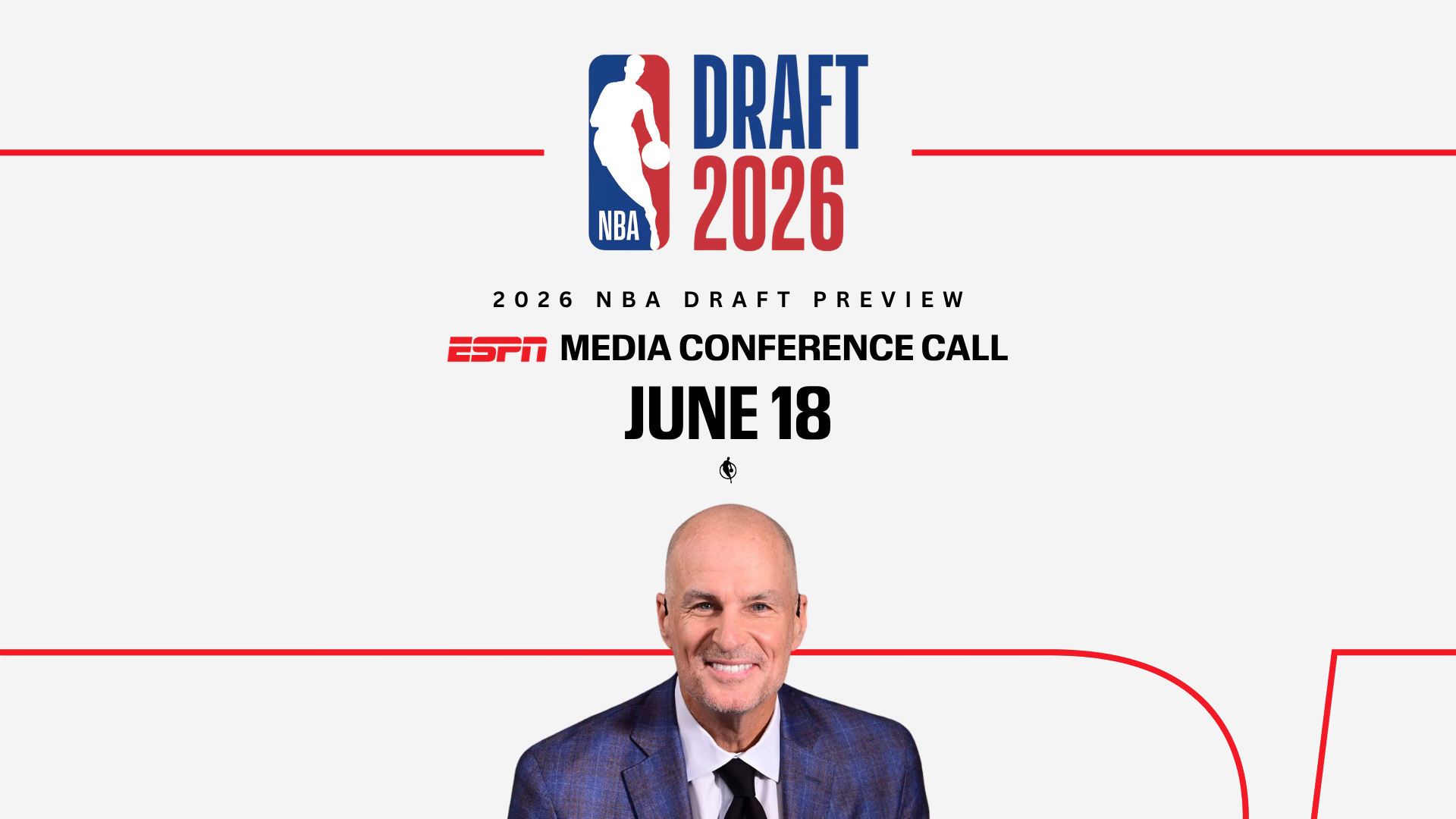
ESPN NBA and College Basketball Analyst Jay Bilas previewed the 2026 NBA Draft on a June 18 media conference call.
Q. I’m curious what you think about what Brad Underwood has done at Illinois given Keaton Wagler is going to be the third one-and-done in two years, and Illinois will have a first-round pick three years in a row. A long way from where he started in Champaign.
BILAS: Yeah, Brad is a great coach. He’s done it in different ways at different places because he’s been successful everywhere he’s been. But I think in the last several years at Illinois, their talent evaluation and acquisition have been terrific.
He’s got really good players that fit well together, and I think anytime you have a situation, it’s one thing where you acquire the talent that everybody knows is highly rated and all that, and it’s another thing where you’re a little more creative.
Finding Keaton Wagler, who honestly, I had not known about when he was in high school, and finding a guy that’s going to be a lottery pick and going to a first Final Four in forever is incredibly impressive. I don’t want to say I’m surprised because I’m not, because I’ve known Brad is that good all the way back to the old days.
But I think one of the fun things to watch about Brad has been how he’s evolved and changed things as the game has changed. Not just the game on the floor but the environment around the game. He’s been in lockstep, if not ahead of it.
Q. How rare is that among coaches? Because he is willing to address how he builds a roster but how his teams play over the course of his time at Illinois.
BILAS: I don’t know that it’s rare because I think most of the great coaches, or the best coaches, I should say, look first and foremost not at how they want to play but how they’re going to win. That’s the ultimate objective is to navigate things in a way where you can be successful.
You’re certainly not going to do anything that’s going to compromise your values and all that, but I think for some older coaches, there’s a tendency to complain and lament the way things are versus the way things were, but there’s never a time where things have stayed the same over that period of time, if you look to any period in the game.
But rather than spend time complaining, I think Brad is one of those that spends time looking for solutions and the right way to do it.
Q. Just wanted to ask about Dailyn Swain. He’s a guy that’s risen up on the board, gotten to solidify a first-round spot. What about his attributes and his traits that have been attractive to NBA teams, and where do you see him falling in that first round?
BILAS: Well, I think there’s a very good chance he’s drafted in the first round, whether it’s in the 20s or before that. Obviously, we’ll see.
This is one of the best drafts I can recall from a depth-of-talent standpoint. In other words, I just don’t remember this many impactful freshmen coming into one draft, where you could be at No. 10 and be perfectly content that you’re going to get an outstanding prospect.
Obviously, we’ve seen in the past where further down the draft you find gems, but Dailyn is kind of a Swiss Army Knife out on the floor. He’s got really good measurables. Like he’s got size on the wing, but he’s also got great length. He’s tough. He’s a really good athlete. He can impact the game in a number of different ways.
The one thing that he needs to improve upon, I think, to be the player that he wants to be is to become a more consistent shooter. He’s not a consistent three-point shooter. But everything else, there’s a ton to like about him. He showed it certainly at Xavier, but last year at Texas and all the different areas where he impacted play. He was their best player.
Q. You talk about teams in the 20s, the Spurs got a pick at 20. A lot of talk about who you can pair with Wemby in that front court. I’m curious, do you think that’s a situation they try to fix in the draft or maybe go in free agency or maybe both? How do you address that 4 position next to Wemby? If so, who is a guy they could be looking at in the draft?
BILAS: In the 20s?
Q. For the Spurs’ pick.
BILAS: Yeah, it depends where guys fall. But like a Hannes Steinbach at Washington is an outstanding big guy, Chris Cenac, Jr., at Houston, if he were to fall down that far to the Spurs is a possibility.
I think you mentioned whether it’s free agency or trade, every team now, it’s going to be hard to keep your higher valued players together for longer periods of time because of the way the collective bargaining agreement works and second apron and all that stuff.
So, teams that have draft assets I think are in the best shape, and sort of the bellwether for that I think right now is Oklahoma City. So, if they have to make some changes, they’ve got draft assets that they can fill some of those holes.
Q. I was just wondering if you could break down Arizona’s four guys, particularly curious your thoughts on Koa Peat and his decision to stay in the draft and also Tobe Awaka if you see with his unique skill and rebounding, if that’s something that could help carve out a spot either in the draft or longer term in the league?
BILAS: Yeah, I’ll start the last part first. Tobe Awaka, obviously watched him play at Tennessee and then Arizona, and how he continued to mature, which you expect as players get older, they’re going to mature, but he went from being a starter to being content coming off the bench and playing a vital role on a championship contender and a Final Four team.
His rebounding per minute, especially on the offensive rebounding side, is elite. He was the best per-minute rebounder in basketball last year. So, he can get you extra possessions. He’s big and strong. He can hold his own.
The game is a little bit different now, so the 4 spot, 5 spot, you may be guarding on the perimeter more than you were expected to do years ago. But he’s got value, and I think he’s certainly going to, most likely, I shouldn’t say certainly, most likely going to be taken in the second round.
Koa Peat, I think that was part of your original question. I thought there was a fair chance he would go back to Arizona. There’s a ton to like about Peat because he’s big and strong and athletic, and he can operate from 12 feet and in very effectively. He rebounds. He is not a shooter yet, and that’s something I thought that perhaps in today’s game he might go back and continue to refine that in college. And then next year’s draft is not going to be quite like this one, so there’s certainly a chance where he could be a higher pick.
But there’s certainly nothing to argue with about if he’s ready to make this step. But I thought there was a fair chance that he came back.
But he’s a first-round selection. It’s just a question of whether he goes anywhere 15 to 25, depending on how he’s viewed and what else is available and team needs, things like that.
I think the best prospect on the Arizona roster is Brayden Burries. Burries is an outstanding shooter. He’s tough, man, and he’s really good in transition. He’s got finishing ability when he gets — he’s got burst when he gets near the basket. He finishes really well.
I always think back to that block he made at the end of the BYU game that sort of saved the game. He’s got that — on a team that had a lot of different options, he turned out to be near option No. 1. As a freshman, that’s really impressive because he’s got a lot of growth in front of him. But what he’s got right now is incredibly impressive.
This is a guard-heavy draft, but he’s going to hear his name in the top 10, in my view.
The fourth would be Jaden Bradley. Bradley, as you know, was the Player of the Year in the Big 12, and I know that raised some questions with some people, but as a leader, he improved his game. Like when he was at Alabama, I don’t think he had anywhere near the game that he’s leaving Arizona with. He’s not going to be a guy that you expect to lead the team in scoring or anything like that at the NBA level. But he’s going to help you win. He checks a lot of boxes.
He’s a winning player, and so I think he’ll have some value in the second round for sure.
Q. If I could ask you about Peat, what’s your thoughts about, well, there’s more money now in college for a late first rounder, probably can make the same, versus the fact the NBA has added more staff, they’ve got the G-League connection and you can develop there easier than you could 10, 15 years ago? How does that balance strike you, if you were in that position, late first round?
BILAS: Yeah, that’s a perceptive question. As I think you point out in the question, there are different ways to develop in a career. The old-school conventional approach or conservative approach would be you do your developing in college, and you try to go into the NBA as more of a finished product. That’s not necessarily, it’s one way; it’s not necessarily the only way or it’s not necessarily the best way, because as you point out, the development component in the NBA is impressive.
So, there’s no one way to do it. It’s just a question of what the player would prefer, the player and the player’s family, advisors, whatever.
There’s no right answer there, but that’s why I brought up that I thought there was a fair chance maybe he would choose the option that you brought up first of doing that in college and then coming out next year, maybe being a higher pick.
I don’t think it matters, honestly. It matters what the player wants, and we can all make our judgments in hindsight when we look back in 10 years, did he make the best possible decision?
But the reason that I tend to think that staying in college is a good thing for some people, not for everyone, is it’s another year of maturity. It’s another year of education. There are things that go beyond just the money. But when the money is equal or within the same range, to me what’s the difference?
But reasonable minds can differ on that, and I certainly don’t fault any player if they’re ready to go, then go. That’s their decision, and I support it.
Q. Any thoughts on Cade Tyson, who graduated from the University of Minnesota? And any thoughts on where you see Minnesota Timberwolves looking so late in the draft? We know they need to have a point guard, but is that something they can get in the draft or are they going to look trade-wise to do that?
BILAS: There are always things you can do in the draft if there are good pieces available for you where you’re picking, and I think we’re going to see teams that are going to be active, and I can’t list them for you, but they’ll be active with trades on draft night to try to move up, down, to procure draft assets, whatever. We’re going to see some of that. That’s hard for someone like me to predict.
Yeah, you hear things, but you never know. This is lying season, after all.
But to your question about Cade Tyson, watched him at Belmont, and then he went to North Carolina, and he did not have the kind of season that I think most expected from him or that he would have wanted.
Anytime that kind of thing happens, you’re going, well, maybe the jump or the different level of competition or whatever, and then he transfers to Minnesota and he’s one of the nation’s leading scorers. He can really shoot it. In a game that values shooting and stretching a defense, he’s got value in the NBA. He could be a second-round pick; he could go undrafted. But there are a number of undrafted players that stick in the league and have productive careers for a long, long time.
So, the one thing that he does that’s going to put him in really good stead is he can shoot it. When he can shoot it, you’ve got a chance.
Q. Do you think the Darryn Peterson situation is one-off, and do you think it represents a possible larger shift with people not playing through injuries as much and just sacrificing their draft position?
BILAS: I don’t think it’s a trend, like Darryn Peterson was the best player, in my view, in high school last year, and there was zero indication that, no questions about his competitiveness, his want-to, any of it. None of it.
Now, he’s a very soft-spoken young man, and this is my view, and I don’t expect people to share this, but this is what I think: In the absence of perfect information, people are going to speculate, especially people in our business. I don’t think the speculation that occurred in the media and surrounding his situation was helpful to people’s perceptions and helpful to people’s view of him.
He’s the real deal talent-wise. He is the most talented player in this draft. Had he played a full season without this cramping thing and the ankle, and then he had one game where he had the flu, and since Michael Jordan had the flu game, if you don’t play through the flu, somehow, you’re not a competitor. I don’t buy that for one second. I can’t get out of bed when I have the flu.
But that created some question marks in people’s minds, myself included, and there’s just this nagging little thing in the back of your mind when you’re evaluating going, “we didn’t see what we thought we’d see,” and still he averaged 20 a game. He shot a really good percentage from three. He had moments, unbelievable moments like at halftime in the game against BYU, was there any question who was the best player on the floor? It was him.
Again, this is my view. But when he wasn’t able to, when his body wouldn’t let him play in the second half, what player who’s on his way to a 35, 40-point game says, “I’ve done enough?” I don’t believe that happened. I don’t believe that happened.
I sat down with him at the Combine for an interview and got to hear him explain what he went through, and when you hear like in September he had a full body cramp that required them calling 911 and hospitalization, you could understand that maybe when this crops up from time to time, there’s something to say, hey, let’s make sure there are doctors there, and Kansas had doctors and all that stuff. I just don’t believe that he was tapping out. Because how would you explain the last eight, ten games where he played 32 minutes a game? It’s just something where his body wouldn’t let him do it, and maybe we could argue about, were they too cautious in this game or that game or whatever. Reasonable minds can certainly have that discussion.
But my thing is if you think he’s the best player or the best prospect, you think he’s the most talented and you take him at No. 2, so you wouldn’t take him at 1 if you’d take him at 2? If you think AJ Dybantsa or Boozer is better — that’s to me why this draft is so fascinating. You have three guys in my view that are worthy of the No. 1 pick this year. Peterson is the most talented player. Dybantsa looks like he was built in a lab to play in the NBA, and Boozer is the best pure basketball player. The analytics say you take Boozer.
Really, it’s going to be, to me, fascinating the decisions that are made, and I don’t know that we’ll get the why when they’re made, but I think it’s going to be fascinating to watch. This draft has a lot of really interesting decisions that are going to be made because there are so many really good players.
I’m sure this will be no different than any other draft I’ve been a part of on the broadcast side is that we’ll look back in five years and we would have done it differently. That’s probably going to hold true in this one, too.
Q. You talked a lot about star power so far in this draft, and so much of tune-in for NBA games on television has to do with star power these days, the KDs, the LeBrons, the Stephs, they’re not going to be there forever. With all that star power coming into this draft, who do you think might have an immediate or the most immediate impact for viewers in terms of, like, I need to watch that guy?
BILAS: Well, the top 3 or 4. I think you’re going to see a lot of players that are going to fit that bill. Whether it’s Caleb Wilson from North Carolina, like, he’s probably the most dynamic athlete in the draft. Darius Acuff, Jr., of Arkansas, he could wind up leading the NBA in scoring. Not his first year, but you could certainly see that happening.
Like when Kevin Durant came out in 2007, that was one of the things you said about him was he could wind up leading the league in scoring.
There are so many good players in this draft. Mikel Brown, Jr., from Louisville could wind up being the best guard coming out of the draft. He’s talented enough that you could say that. Nobody knows, but you certainly have certain beliefs about it.
Because of the level of talent, you’re going to have guys who are going to be drafted further down that are going to be great, and then you may have some guys that don’t live up to what observers expect.
I haven’t looked back at this and gone over the tape of it because you’re busy with the now, but when Shai Gilgeous-Alexander was taken 11th or 12th in his draft year how many of us were raising our hands going, there’s a two-time future MVP. I don’t know who was saying that. But there’s certainly that possibility, if not probability, that we’re going to have a situation like that where you have a player further down this draft that turns into a first-team all-NBA performer, and the trick is finding that player.
It’s a difficult — like the more I’ve been involved in this, the more respect I have for the decision makers in the draft process because it is not easy.
Q. Does it hurt or does it hinder any of their star power growth, for these guys at the top in particular, with the teams like Washington, Utah and the Grizzlies having the first three picks? Let’s be honest, these are not NBA Christmas Day teams. Does that hinder them and their star power growth at all?
BILAS: Well, I think the answer overall is no, that sometimes that can be helpful. You go into that situation, you may not be expected to win right away, so you have the luxury of being able to make mistakes as you mature. So, you certainly see a lot of players that have gone to teams that were on the bottom rung in the standings, and they turn out to be great players.
You’ve seen it go the other way, too. It just sort of depends on the player and depends on the situation. So, I’m not particularly bothered by that. Anthony Davis went to the Pelicans, and he’s had a pretty damned good career. So, I’m not worried about that.
Q. With Kylan Boswell, there’s a chance he gets picked late in the second round. I’m curious what you thought about his career between Arizona and Illinois and maybe what NBA teams might like about what he brings to the court.
BILAS: Yeah, Kylan has had a terrific career. As you pointed out, he started at Arizona, and when he transferred — part of it’s my age, sometimes you hear about a player transferring, and you’re like, he was killing it at Arizona. I thought that would be a great place for him to stay. But he made a terrific decision going to Illinois and I think he really showed well.
His leadership, his ability to defend, he’s strong, he’s a good athlete, and he’s shown the ability that he can step up and score, as well. But that’s not his primary function in the guard position.
I thought the maturity that he showed — like I think he was incredibly helpful to Keaton Wagler, like incredibly helpful. Not that the NBA is handing out kind of blue ribbons for leadership and maturity, but for him to be able to adjust to an emerging star and then to be able to play on or off the ball and to perform, like, through injury when he was out and then coming back and seamlessly fitting in, he’s going to be a guy that’s going to be a guy that’s a no-maintenance player for an NBA team, and that’s got value, too.
Q. Illinois might have a first-round pick on this year’s coming roster. What did you like about the team that they were able to put together for 2026-27?
BILAS: Well, I think they were very intentional about getting players that have a certain skill level and that are versatile and that are “we-first” instead of “me-first.” Sometimes that’s not easy to identify. You can be seduced by talent.
But Brad puts together a team, so it’s not necessarily a collection of talent, it’s a collection of — you certainly have to have talent, but talent that fits together.
I think that’s why last year, honestly, from my seat, was so joyful to watch, and I can’t imagine it wasn’t joyful for Illinois fans. Did Illinois fans really care what native language any of those players spoke when you watched them play and they were just about winning and each other? It made you feel good.
I loved watching them play from the first game. They were a joy to watch. Not just with the way they performed X-and-O-wise and all that stuff, but the way they related to one another. It was a true team. I think they deserve a lot of credit for that because that’s not by happenstance; that was intentional.
Q. You mentioned Mikel Brown’s ceiling at the next level. I’m wondering as you look at this guard class maybe how much him sitting out with that injury hurt his stock this year and maybe what separates his game from some of the other guys who could be taken in that range, Acuff and Wagler and Flemings, as well? What stands out to you?
BILAS: Yeah, I don’t think him being out is going to be an issue. From my recollection, the time that he spent out was due to a lower back thing. They have doctors that will be able to tell them if this lower back thing is going to be a recurring problem, things like that. That’s certainly going to be up to them on the medical side.
Similar to what we talked about a little bit earlier, for those that were on the call with Darryn Peterson, I do recall at the time that Brown was kind of in and out because I did a number of Louisville games this last year, there were rumors going around, oh, he’s going to shut it down, stuff you hear when those kind of things happen, at least in today’s game, and I never bought any of that, because he didn’t strike me as that kind of player that was dealing with that.
Then he came back and he put 45 on NC State when he comes back.
So, it certainly wasn’t ideal where you’ve got a player that’s in and out. But the NBA is not going to be concerned about that. There’s an issue of, “is there a medical problem or is there not.” If there’s not, and I understand there’s not, he’s going to be taken really high in this draft.
Now, whether it’s 7, 6, 9, whatever, once the draft is over, nobody cares where you got drafted. It’s how you perform. Right now, it’s kind of a — there’s a horse race feeling of, do you take Acuff before him? What about Wagler? What about Burries and Flemings? There’s that horse race aspect to it, but nobody is going to care once the draft is over. They’re not going to care. There’s not a number that goes by these guys.
I don’t know how often when I mention Shai Gilgeous-Alexander where he was drafted is even brought up. All they say is MVP and champion and all that stuff and leading the league in scoring and all that. I’m not worried about that. Brown can really play.
The positives overwhelm, in my view, some of the limited question marks that came up with regard to availability. It was just one season.
Q. Aside from the lottery, what player do you think will make an immediate impact for an NBA team?
BILAS: Immediate impact outside the lottery? There are a couple that come to mind, and they may get taken in the lottery. Morez Johnson, Jr., from Michigan is a player that is sort of outside the group we talk about the most that I think is going to be impactful in the NBA because of his athleticism, his length, his motor, his ability to impact the game in ways other than scoring.
Then I don’t know where Labaron Philon is going to go from Alabama. He could end up going in the top 10. He could wind up 15th, whatever. But in another draft that didn’t have this sort of guard-heavy feel to it, you would see him being talked about certainly a lot higher.
I actually think — I don’t know where he’s going to go, but I think Bennett Stirtz of Iowa is going to be a good player in the NBA. I don’t know that bringing this comparison up hits the mark, but I feel about him kind of like how I felt about Kyle Korver when he came out of Creighton years ago. I remember saying, “man, the dude, what a great shooter.”
But then, I don’t know what it is about the draft, but you talk about all the positives and then you’ve got to bring up a negative. “Who’s he going to guard?”
I think I brought this up on a podcast recently. I remember talking to Dana Altman, who was his coach at the time, and saying, does anything concern you? He goes; I just don’t know who he’s going to guard in the NBA. How long did he play, 15 years? Dana is one of the smartest dudes in the game. There’s always that so you’ve kind of got to think more about the positives.
Stirtz can shoot it. He’s really good in pick-and-roll situations. He’s tough as nails. He’s a good passer. I think as long as he stays healthy, he’s going to do well in the NBA.
Q. In your opinion, who would be the first point guard you would select off the board?
BILAS: Well, if you consider Darryn Peterson a point guard, then Darryn Peterson would be No. 1. I think the first guard sort of after that initial group — I don’t think the draft is going to go the way we think, by the way. But if you go with like, okay, Peterson, Dybantsa, Boozer and then Chicago picks No. 4 and it seems like Caleb Wilson from North Carolina and all the lists and big boards and all that, I don’t have a big board, I just have a yellow pad that I scribble on.
But I have next, Darius Acuff, Junior. Acuff is ridiculous. Like, he’s this powerful, compact, lengthy. He’s, though he’s not that big, he might be 6’2″, it’s like trying to guard a bowling ball going downhill. He is ridiculously strong and powerful and athletic, great finisher. He can make off-balance body control shots under pressure. He’s got range.
He led the SEC in scoring and assists, which hasn’t been done since Pete Maravich was at LSU. That’s a minute ago. And there have been some damn good players in that league.
So, he’s special. And the way he finished the season like the SEC tournament and the NCAA Tournament, he was damned near unstoppable. I think it was Fran Fraschilla and Seth Greenberg, both of them, did but I don’t know which one of them said it first, but they compared him to Damian Lillard. I think there are some differences, obviously, but I thought that was a fair comparison. I think it shows how talented he is.
Q. With programs like LSU adding G-Leaguers and Purdue staying more old fashioned, what do you think we’ll see more of an emergence of in the transfer portal and NIL?
BILAS: I think those are the two, “extreme” is the wrong word, but those are the two sort of furthest ends of the spectrum.
To me, what it shows is there’s a lot of different ways to do this and do it right. I’m not bothered, and again, reasonable minds can differ on this. This is a matter of taste more than anything. But in setting up the answer on LSU, when Baylor took James Nnaji earlier in the year, a lot of people had their hair on fire over that because he had been drafted. He was an international player, got drafted in the second round, I believe, first pick of the second round by Detroit, never played in an NBA game, and when he went to Baylor, he didn’t go to court to get eligible; the NCAA deemed him eligible under his rules, and people got kind of, I thought, unreasonably crazy about that. What did he average, three points a game or four points a game?
It’s not like every college team is out kind of trolling the G-League looking for players.
But we had the same situation or similar situation with Charles Bediako at Alabama. He had played in the G-League, and he wanted to come back to school, and Alabama knew him, liked him, and wanted to have him back.
From my seat, it was kind of, what’s the problem? Like a young person wants to come back to college? Generally, we should be kind of happy about that.
I remember the controversy, and the day he played his first game, I believe they played against Tennessee, and he had like 12 points or something, which is not newspaper worthy, and three freshmen had over 40 that day and we were wasting all our time talking about Charles Bediako.
I’m not bothered by if LSU wants to take players, whether they’re from junior college or they played Division II or played in the G League or whatever, I’m not bothered by that. Reasonable minds can differ. If some people don’t like it, that’s fine. But it’s not like everybody is doing that.
Similar with Purdue; when people say, “oh, the transfer portal is ruining basketball,” it’s not ruining anything. It’s player choice. If you want your players to stay, treat them better and make it a good experience and they’ll stay. Purdue has proven that, and they’re not the only program.
If retention is important to you, then recruit players you have the best chance to retain, in addition to winning with now. So, I think there are 300-some Division I institutions. I don’t know what it is now, 356 or whatever it is. Not everyone can do it the same way, nor should they do it the same way, and I’m fine with it.
Q. I wanted to get your thoughts on Dailyn Swain. Did you see enough with the improvement of the three-point shot and is the ball-handling to make you feel there is a really good upside there for whoever gets him?
BILAS: Yeah, Dailyn is an NBA player, and he’s a Swiss Army Knife out there. His shooting has improved, but it’s still got a ways to go. But that’s not the only factor that brings value, with his length, athleticism, his ability to get downhill, defensive versatility, toughness. He’s going to play in the NBA. It’s just a question of where.
I think most observers would rank him in the 20s, which is where I rank him in this draft, and this is an unusually good draft. But yeah, he’s going to help somebody and be a valuable asset.
Q. Just his backstory, I know you just got done talking about the transfer portal, to see a coach get a kid that young, develop him even though he was moving from Xavier to Texas, does that still mean something when you can see the whole scope of player development while a guy is in college?
BILAS: It’s great. It’s one way. Like Sean is a great coach and had a relationship with Dailyn at Xavier, and then when he went to Texas, Dailyn kind of went with him.
When coaches spend so much time now talking about relationships, they’re usually talking about relationships where they stay at the same school with them. So, this wasn’t, Dailyn’s relationship that you’re talking about wasn’t with schools as much as it was — it was both. But it was his relationship with Sean.
He maintained that relationship in two different uniforms, and that’s fine. These players aren’t under contract to the school. If they were, then we’d have a discussion. But they’re like any other student in that if they want to transfer, they can transfer.
There are a lot of different ways to do this, but when I hear the relationship thing, a lot of times what I hear that’s a sub text of that is control. The school wants to control the movement of the player, and they say relationship on top of it.
I played with, and I played a long time ago, but my relationship with some of the guys I played with for only one year is stronger than the relationships I had with guys I played with for four years. So, what does that tell you about the importance of relationships?
Same thing with coaches. I had relationships with coaches that I had for less time than other coaches I had for longer.
Development of players, an individual player, can take a different path from player to player. It’s not all the same. So, there’s no one way we can say, okay, the best way is to stay at one place for four years, because you’re going to look at a number of players that transferred two and three times that had unbelievable experiences and unbelievable development. So, there’s no one way to do it. That’s a good question.
Q. A quick thought on Sean. He’s done it at Arizona, he’s done it at Xavier, just Sean Miller as a development of NBA talent.
BILAS: Well, Sean is just a great coach. He’s a great teacher. He was an outstanding player at Pittsburgh. How many coaches were on The Tonight Show when they were kids as ball-handling phenoms?
But he’s been around for a long time and has proven it everywhere he’s been, whether it’s been an assistant, head coach, whatever. He’s had two stints at Xavier, and he did an amazing job at Arizona. He did an incredible job last year at Texas under circumstances that you’re taking over a new program with all new players, basically all new players, certainly all new to him.
Then they make a run in the NCAA Tournament where everything kind of came together. So, all the pounding the rock for the whole year where it wasn’t easy, but that’s the kind of guy he is. He’s a Pittsburgh, kind of tough dude.
But he’s evolved in the way he’s — he’s evolved as a coach over the years, too. Part of it is his development of those in his charge, but his development individually, as well, has been really impressive.
Q. I just wanted to know how Acuff would fit in with Darius Garland on the Clippers?
BILAS: Darius Acuff? He can fit in with anybody. I think different people look at it differently. I’m a best-available-player person. If you’re looking for fit, and the extreme example is if you go all the way back to 1984 when Houston had the 1 pick and they took Hakeem Olajuwon out of Houston, and Portland had the 2 pick, and Portland had Clyde Drexler at the time, and the decision was do you take Michael Jordan or do you take a center? And this was back when centers were valued kind of like running backs in the NFL. They’ve been valued differently over time. This was back when centers were highly valued in the NBA.
Portland’s GM was a guy named Stu Inman. They already had an all-star wing. So, do you take Michael Jordan on top of Clyde Drexler? They needed a center. So, Sam Bowie was the best prospect at center after Olajuwon.
The story goes, and Bob Knight actually told this to me personally, but it’s also been reported that Stu Inman called Knight and said, “what do you think?” And he said, Michael Jordan is the best player, you should take Jordan. He says, well, we really need a center. And Knight’s response to Inman was, then play Jordan at center. Don’t worry about the fact that he duplicates what you already have. He’s the best player.
So, it depends on how you look at it. Acuff won’t have any problem fitting in with anybody that the Clippers have, if they decide to stay at 5 and Acuff is the best player on the board.
-30-
ESPN media contacts: ben.cafardo@espn.com; ronce.rajan@espn.com; colin.bradley@espn.com.