Repeat Offender
Outside the Lines (Sunday, 9 a.m. ET, ESPN)
A standout in the mid-80s for the University of Washington, Reggie Rogers was an All-American defensive end and later a first round pick for the Detroit Lions. But his career was derailed one night in 1988, when he began a destructive pattern of drinking and driving that he would repeat for the next two decades. Rogers ran a red light and crashed his SUV, killing three teenagers. He was found guilty of negligent homicide and served 16 months in jail. In 2010, Rogers was arrested for yet another DUI, but because of Washington state law, could only be sentenced to the maximum of one year in jail. Reporter Shelley Smith examines Rogers’ case and speaks with the parents of one of the teenagers killed 23 years ago. Bob Ley hosts.
“Justice has not been served. If you can drive that many times and not be held accountable, we have to change the laws.” – Roger Goodman, Washington state congressman, who in January sponsored five bills which would increase penalties for driving drunk in Washington, referring to Rogers’ multiple DUIs.


Toni Stone’s Tough Path to the Negro Leagues
SportsCenter (Sunday, 10 a.m., ESPN)
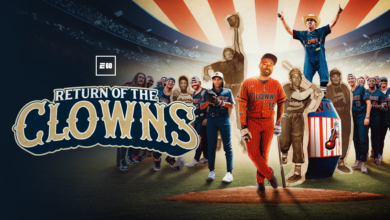
As a young child Toni “Tomboy” Stone fell in love with the game of baseball. Born in 1921, she grew up during the Jim Crow era in the United States that permitted legal, racial segregation. Stone learned to overcome racial bias but also struggled with sexual discrimination as she played in men’s baseball leagues from 1932 until 1954. Barnstorming the country from Minnesota to California, she proved herself on the field as a capable player against men, and earned professional minor-league contracts with the San Francisco Sea Lions and the New Orleans Creoles. Her teammates accepted her as they all faced adversity and bitter racism while hoping for an opportunity to play in the Negro Leagues, which Stone did in 1953 for the Indianapolis Clowns. In support of Black History Month, Jeremy Schaap reports on Stone’s contribution to sports.
“They knew that I was a drawing card. But, (the manager) was going to sit me on the bench. I told him, ‘I’d come to play ball. I had my shoes, I had my old glove that come from the Goodwill, now I want to play ball, so give me a chance.’” –Toni Stone, from 1992 MLB interview about the battle she faced as a woman trying to play men’s professional baseball.
“A lot of the guys did not like the fact that she was out there, so she had to more or less play a role. She had to act it out. Aunt Toni was a hard drinker, a hard smoker and hard player. She would play cards and roll dice with the best of them. You got to remember she was on a bus with these guys for long periods of a time. So, she wanted to do what they did, and she really did fit in with them.” –Maria Bartlow-Reed, Toni Stone’s niece
https://youtu.be/DGJ-03RpCjA
In the video clip (in order): Martha Ackmann, author of the book “Curveball;” Mamie Johnson, second woman to play in Negro Leagues.
The Interrogation of Kurt Busch
NASCAR Countdown (Saturday, noon, ESPN)
Outside the Lines (Sunday, 9 a.m. ET, ESPN)
Former NASCAR Sprint Cup champion Kurt Busch had a controversial parting with Penske Racing, one of the top teams in the sport, at the end of the 2011 season. The stormy relationship with his race team included expletive-laden, race-day tirades on his in-car radio, and ended with a confrontation with a TV crew after he made an early exit from the 2011 season finale. Busch talks with reporter Marty Smith about the final-straw incident in Miami, how he has sought help from a sports psychologist, and a fresh start in 2012 with Phoenix Racing.
Marty Smith: “How do you hope to react to adversity in the future?”
Kurt Busch: “I’m going to conquer it. I want to challenge myself to be able to conquer it because I’m one that doesn’t shy away from challenges.”
MS: “Is that something you think you’re capable of? It’s kind of like we’ve seen this story before. It’s a recurring theme. Why is now the time you feel comfortable you can change?”
KB: “It needs to be now. I’m 33 years old. There’s the past championship that I have. There’s the responsibility of being a past champion that you have to represent the sport better. And, man, I’ve messed up enough, drug NASCAR’s name into the mud a few times. There’s still time now to make a difference.”


Knicks’ Lin International Household Name
SportsCenter and various news and information programming
A few weeks ago, Jeremy Lin went from Harvard grad and NBA hopeful to household name, and not just in United States households. ABC News’ Gloria Riviera, based in China, traveled to a town where Jeremy Lin has roots, and where he is very much an inspiration
“He said, ‘One must have a dream, as long as you have a dream, and work hard to realize that dream.'” – Sot Yan Bai, English teacher at Pinghu High School, on Lin’s comments to the students during his visit last May.
https://youtu.be/NhAGJLqT4ZY
-30-
-
-
-

-

-