- In-depth series exploring what it means to be an openly gay athlete in the post-acceptance world, with stories on Gus Kenworthy, Derrick Gordon, Megan Rapinoe and Chris Mosier.
- Opening essay from writer and editor Christina Kahrl on the ultimate goal for LGBT athletes—it isn’t tolerance, it’s integration.
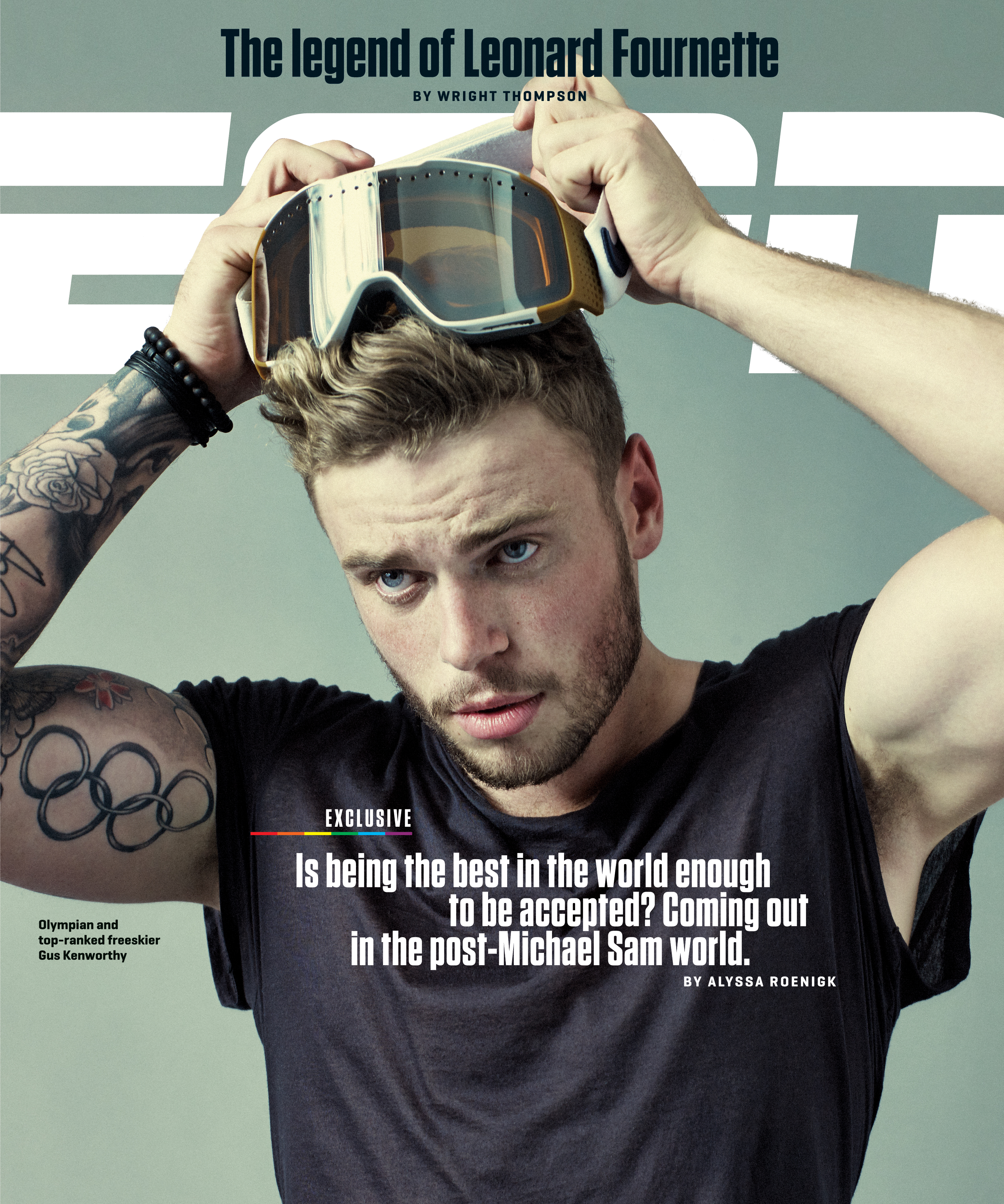
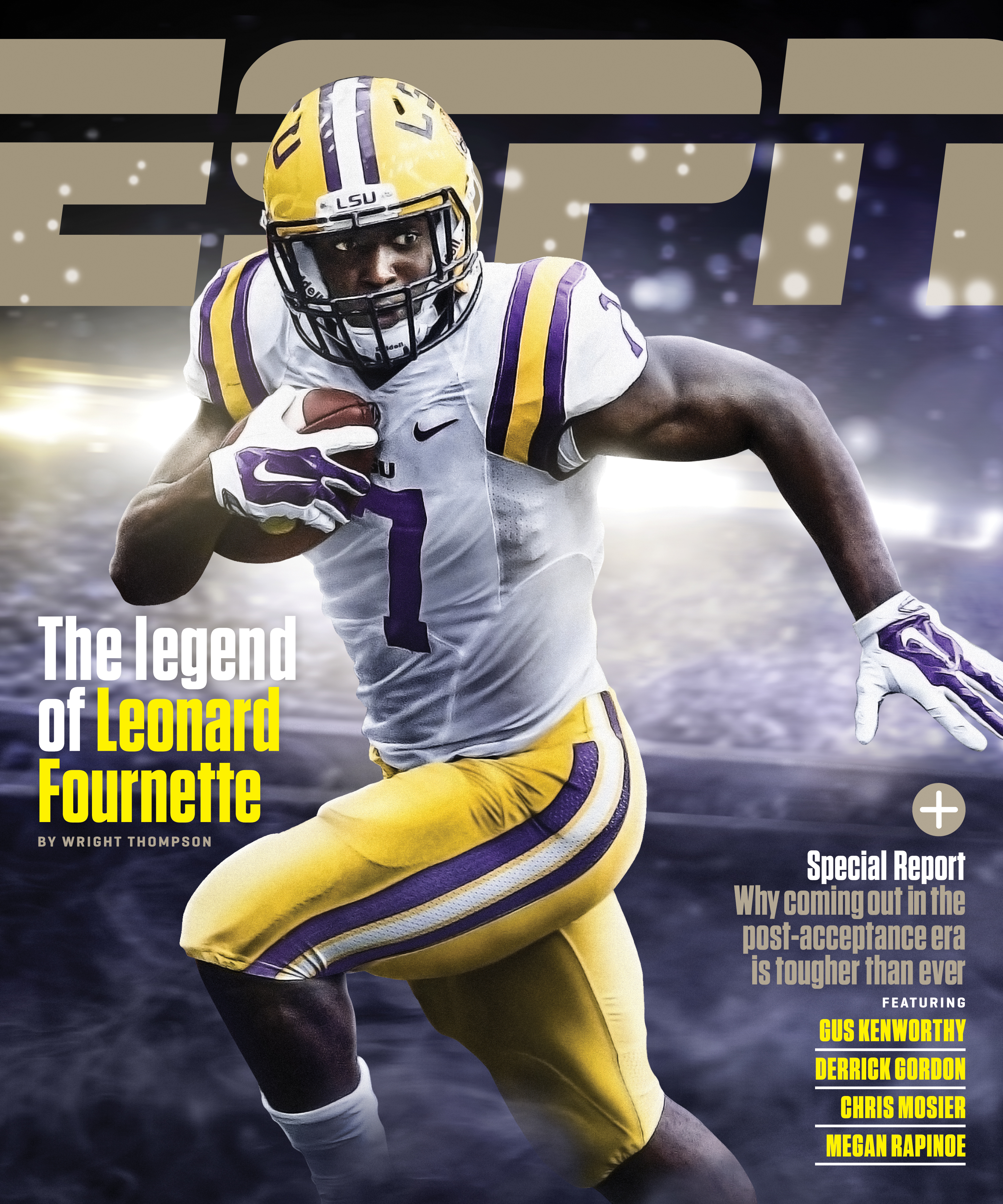
On the covers:
- LSU running back Leonard Fournette is a legend in the making, setting SEC records and a new national standard each week. And to think he’s only a sophomore, not yet eligible for the NFL draft. But how does one deal with being mythologized in real time? Can any 20-year-old truly be prepared for this level of expectation, this amount of pressure? Senior writer Wright Thompson tells the tale of Fournette in “The Young Man, the Myth, the Legend”—how he is making, and repeating, history.
- In “Gus Kenworthy’s Next Bold Move,”senior writer Alyssa Roenigk shares the truth about the X Games and Olympic superstar: He is now ready to live openly and reveals his personal struggles leading to this moment and why now is the right time to come out to the world that he is gay.
Issue Features and Highlights
For a moment, it seemed we were in for a revolution: Robbie Rogers, Brittney Griner, Michael Sam and Jason Collins all came out, and it seemed that every gay athlete would feel free to do the same. But a few months can’t undo a lifetime of stigma, and the tide slowed. The good news, though, says Kahrl: We’re moving in the right direction, toward the future that’s best for all involved: a time when everybody can be out and nobody cares one way or the other. By Christina Kahrl
In April 2014, while a guard at UMass, Derrick Gordon came out, becoming the first openly gay D1 college basketball player. By all accounts, everything went well—his friends and family were accepting, and he was lauded in the LGBT community. Then he decided to transfer to a better program—and ended up at Seton Hall, a Catholic university in the thick of recent controversy. This, of all universities, is now home to Gordon, an athlete who is open about his sexuality and had become a gay rights advocate. So why did Gordon embrace, then shun, the spotlight? By Pablo S. Torre
Megan Rapinoe won a Women’s World Cup for the U.S. this summer. Up next? Rio. Here, the midfielder reflects on how life has changed since she came out in 2012 and where she sees it headed next. Rapinoe went viral when she described herself as “GAAAAY!” on SportsCenter, and soon after the trip to Canada she got engaged to her longtime girlfriend. Here she speaks on several issues— from the craziness of last summer to what it’s like being an out athlete on such a huge national stage. By Julie Foudy
The Definition of an Athlete
In June, trans triathlete Chris Mosier won a spot on the U.S. national team for sprint duathlon, becoming the first known out transgender athlete to make a U.S. national team. A relentless trainer—pre-dawn workouts are standard—Mosier has become equally well known for his advocacy work on behalf of transgender athletes. But as he sets his sights on next June’s world championships in Spain, he is unsure whether he will even be allowed to compete. The concern is that the International Triathlon Union might follow and enforce the International Olympic Committee’s guidelines on participation for transgender athletes and ban Mosier from competing. He is trying to be a trailblazer. But will he get his chance?
(He finished 37th out of 117 competitors in the qualifier and claimed the seventh out of eight spots in the 34-39 age bracket.) Mosier undergoes regular tests to ensure that his testosterone levels remain in the “normal” range for male athletes, which has been good enough for USADA to clear him to compete. As Mosier sets his sights on next year’s world championships in Spain, though, it’s unclear whether the World Anti-Doping Agency will do the same. Mosier himself has said he’s unsure whether WADA will clear him and that he thinks the process will be more difficult than with USADA. He is trying to be a trailblazer. But will he get his chance? By Samantha M. Shapiro
Also in this issue:
- Voices: When sports reporter and commentator Israel Gutierrez came out, he expected to have to fight. Instead, all he got was love. Now he wants to pay it forward and fight for those who won’t have the same experience.
- NFL: The Mag’s Dave Fleming explores the notion of how Clay Matthews has become something of a football jack-of-all-trades. He changed positions late last season, lining up wherever is necessary each week, and has been making waves and plays all over the field ever since. Oh, and his team’s 6-0. We’ll look at the significant impact Matthews has on one of the best teams in the league.
- NBA: Based on projected WAR, The Mag takes a look at the most and least valuable players in the game this season—from Stephen Curry, who, based on his projected production and salary, is the league’s best value, to … well, Kobe Bryant.
Media contacts:
Carrie Kreiswirth – (646) 547-4686 or carrie.b.kreiswirth@espn.com
Jen Cingari – (646) 547-5840 or jennifer.j.cingari@espn.com
To download covers: https://bit.ly/1S7DDma

-

-
-

-

-